Celibrate Recovery
Reply

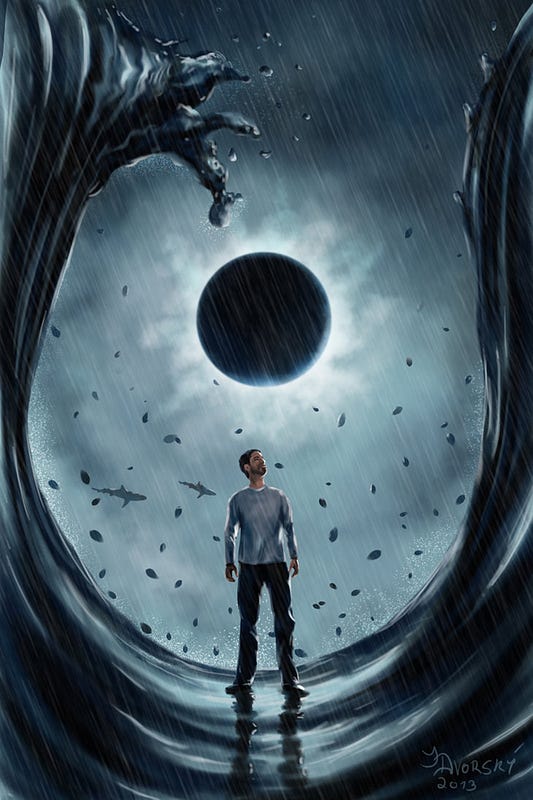
I rebelled and struck out on my own as early as I was unable. I wanted to be my own man, I felt alone like it was me against the world and that nobody truly cared about me. I didn’t realize until years later how wrong I was. I see today by forcing my independence and not allowing anyone to get close to me out of fear of being hurt or letting them down is what lead to my isolation. I told my Wife before I married her “That I was going to do whatever I wanted whenever I wanted and would not answer to her”. The reason I said that, or so I thought, was to proclaim my independence. In reality I was trying to shrug accountability and responsibility. The two words I just typed struck me funny, because that’s exactly where I was going with this. Allow…
View original post 771 more words
All people are good.
At least the underlying intentions of humans are basically good.
There is much evidence to support the idea that all people are basically or fundamentally good.
The first concept that comes to mind that proves that the basic intentions of all humans are common and good, so they must be good is the fact that throughout the world many basic laws are similar and show goodness as a theme. Most to all cultures believe it is wrong to kill. Other laws are in place to support not doing harm and doing good to other citizens, animals, and the environment. The collective conscious generally inspires us to take right actions if we are awake and aware enough to notice.
Even when people have bad behaviors if you ask them layer by layer to explain their underlying intentions you will find them they were good. Even though they may be far off track in the actions they were taking, they were initially trying to do good. Examples of underlying intent being good even when say a person robs a store are things like; take care of myself, feed my family, eat, feel better, buy things we need. 🙂 Off track but good intentions.
All of the charitable work done in the world is because people are basically good. The patience and hard work of parents in loving and taking care of their children is because they want to serve, contribute, and do good. A tendency to nurture and love animals in most people is because they are good. Babies and young children are born with a good nature, and they tend to reciprocate love.
Even though there is much bad in the world it never ceases to amaze me how much good there is in people. Humans work hard to contribute and help. When trials and catastrophes occur so many people bond together and help and assist those less fortunate even when they have lost everything. Behavior can be bad, but given the right circumstances that learned behavior will self-correct and people will return to their good nature and eventually contribute in many ways.
There is far too much evidence in the world to show a common thread of decency and good among everyone for one not to see the good in everyone. When we look for the highest in ourselves and others we can always find it. Let you GOOD come out, no really it’s O.K.!
As part of the human race it is interesting to think about how we think of and treat others as a duty, or following the natural law of reciprocity, or as a higher purpose of service without expectations of anything in return. In many ways it makes sense that we only find it most natural to serve others for whom we care about. We may have a duty to serve everyone, or as mentioned at least deal justly with, and respect all others. It is far too easy to separate people into different groups and feel various motivations as to why and to what level we would have a duty to serve them. This spectrum of levels of caring for others should be more even and equal but our intentions really dictate our attitudes and actions.
The first thought I have as I think about the differences in how I feel and act on duties regarding others, is that subconsciously I separate those I feel I should take care of and those that are outside of that scope. My intimates (family and close friends), loved ones (certain; extended family, friends, co-workers, & neighbors), acquaintances (people I have a connection with), and my fellow man (all others). I truly feel a desire and obligation to serve intimates and most loved ones to a certain degree. It’s more of a desire than a duty. Acquaintances and my fellow man are for the most part outside of this sense of duty to take care of, but I definitely feel like I should honor and respect them and support their well-being if possible. I am pleased that I do not consider anyone to be an enemy or outside the scope of good will towards them.
Intimates are those that I serve authentically, much of the time without my mask. They see the best and worst of me. Consequently they receive the highest level of service but at times they are taken for granted and not served or honored nearly as they should be. It would be my will to take care of intimates as they deserve to be without judgment or harshness. I owe them more kindness and need to check all attitudes that stop me from caring as I need to.
Loved ones may not get as deep of a level of service and caring but what they do get is mostly good. They see the best of me most of the time. It seems funny that these less intimate family and friends would get a more balanced, level, and consistent level of love and compassion but in reality they do. I tend to see the best in them and show them the best of myself.
Acquaintances and my fellow man for the most part are not on my radar as people that I have a duty to serve unless for some certain reason I wake up and pay attention to them and their specific needs. They deserve more than my respect and honor. I need to do more to be aware of their needs and I feel it is my duty to acknowledge this and do more for them.
This writing assignment help me notice subtle attitudes within me that need to change. I need to be more awake and aware of everyone. I need to be kinder and gentler in my intimate relationships. My circle of intimates can be expanded and I should not ever take them for granted, be open with them and truly let them in, and love them as they deserve to be loved. Just like we do not do that which we do not, DESIRE, we do not serve others unless we really CARE for them. We all need to understand better the word care. If and when we open our hearts more of the time and see the highest in others we will automatically care for them. In my work I look for and see the best in others and on a daily basis move strangers from my fellow man group into the loved ones category in minutes of meeting them. I need to do this all the time as I cross the paths of others, look for and honor their humanity fully, it is not only my duty but my nature. May we all wake up and truly notice how incredible everyone is. You don’t have to watch a video on “You Tube” with inspirational music and such to feel connected to the beauty of humanity, you just need to open your eyes and heart and notice that we are already connected.

In a few days many of us will join together with others and celebrate a time of connection and of giving thanks for our blessings.
Many years ago, before I started recovery, Thanksgiving was the only day of the year that I gave thanks for my blessings. The rest of the year, I lived in the world of black and white, all or nothing. I was tossed back and forth by the waves of my circumstances. Either it was a good day, or a bad day.
I had completed the 12 Steps, and now I needed to “live a recovery program.” However, I needed some structure in order to do so (besides attending meetings and meeting with my sponsor regularly).
My sponsor suggested that I do a daily inventory. In this inventory I wrote several things, but included in those items were:
View original post 404 more words
I have come to believe our moral values are formed through experience as we accept ideas and beliefs as values. I also know that various external forces, some of which affected us long before we came into this life, influence and inspire our moral values. Many values can change as we gain understanding and openness, but some core values remain constant and unchanging if we are really being true to ourselves.
Many of our values come from our families and the groups we consider ourselves a part of. During our domestication as babies, toddlers, and youth our parents, grandparents, and in some cases older siblings may subject us to their moral beliefs. While we are making our way in the world it may be natural to adopt or at least live according to this family moral belief system if we want to be loved, accepted, and get what we want within the family system. As we accept these family beliefs as truths we may make them our values also. Being labeled as good or bad within this family system may very well be based off of compliance to the norms or moral values of the family. In many instances these beliefs or values have been passed down for several generations as family tradition and pressure to comply often is great.
Similarly to the family system of implied moral values, most groups whether they be religious, cultural, or affiliated have a system of beliefs, and part of membership is the expectations to live by those norms. For this reason many moral beliefs are inherited or adopted through membership. Since these moral values where inherited, many times a duality in between the way one lives publicly and privately will show which morals are truly and deeply believed. There obviously are times when a person does not live up to values that they really do espouse due to other pressures and or issues. Having a moral compass does not mean we are always right on the trail.
I wish to explain my belief that many values we have are innate. I believe our spirit or soul comes into this life knowing what morals are right or wrong for lack of better terms. I prefer the terms light or dark myself because so many moral beliefs can be in the grey area and really need to be a personal decision. I also believe we can feel what is right or wrong not based on some dogma but based on feelings of the heart, insights of the mind, and inspiration from the universe. I don’t know if it’s that important if we believe that those external forces of inspiration come from a higher power, God, Creator, Jesus Christ, Buddha, nature, the universe, or the cosmos. What I think is important is that we learn to recognize that inspiration and come to trust it as something larger and truer than our own understandings. As we turn more towards light and transform to a point of allowing these insights and inspirations to guide us towards doing what is good, noble, and true we will let go of a bit of those domesticated moral beliefs and be more open to learning that most morals are not black and white.
Moral Values to be accepted, shown, and lived need to be believed in your heart of hearts. This only happens when we deeply learn and honor such beliefs. Since we are far from perfect all sets of moral values need to include forgiveness of self and others as being important, since even when deeply felt and believed all values are difficult to live by. It may be hard to walk our talk and truly live by what we believe. Even though certain values may make us rise to the occasion to meet expectations, if our values are truly ours, we will to a high degree succeed at living by them.
Drug and Alcohol Statistics
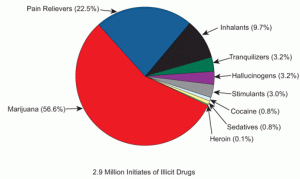
Addiction Place is a site that provides personal stories and informational articles about addiction and self help resources. Addiction has become an epidemic in the United States and in the world.
The National Institute of Drug Abuse has reported that in October of 2014, there was a three time fold in the number of overdoses from the year 2011. In October of 2014, it was also reported that in fatal automobile accidents, 1 out of 3 drivers were under the influence of some type of drug. Abuse of tobacco, alcohol, and illicit drugs is costly to our Nation, exacting over $600 billion annually in costs related to crime, lost work productivity and healthcare.
These are staggering statistics that are continuing to rise with the number of new drugs being developed by the day and that are being imported to the country from different places in…
View original post 111 more words
The Introvert's Roadmap to Self Discovery and Growth
Holistic Health & Wellness
True wealth is the wealth of the soul
Ignite your Human Essence
All about reaching the best potential and bringing it forth!
Maximize Your Happiness, Well-Being, & Life Satisfaction
Discover top natural supplements to boost wellness and health with high-quality options for men and women seeking natural solutions to improve their well-being.
Natural Remedies
Mental Health & Wellness
Open Your Mind
Growing Our Minds Beyond The Stigma
A journey into Cade's world
Witness What Happens When A Ghalib Loving Psychologist Who Doubles As A Hindi Kaviyatri And Raconteur Sits Down Over A Cup Of Coffee And Coelho By Her Side To Converse About Art, Love, Faith, Philosophy And The Journey Called Life! You're Invited!
**Cats Showcase of Authors & Books She Has Read and Reviewed of Her Favorite Writers**
Life Advice from Brilliant Minds
Blogging The Language of the Heart






 Craving Recovery